
Restitching democracy
Unblocking the capillaries of power

I want to continue with a theme that has emerged in the last few newsletters, about the way in which party politics has become detached from the concerns of the people it is meant to represent. This is part of a long-term and worldwide trend that has seen the hollowing out of political representation, tied, most especially, to the rise of neoliberalism in the 1980s. This rationality has framed and interacted with processes of deindustrialisation, globalisation, privatisation and growing state repression, leaving many behind.
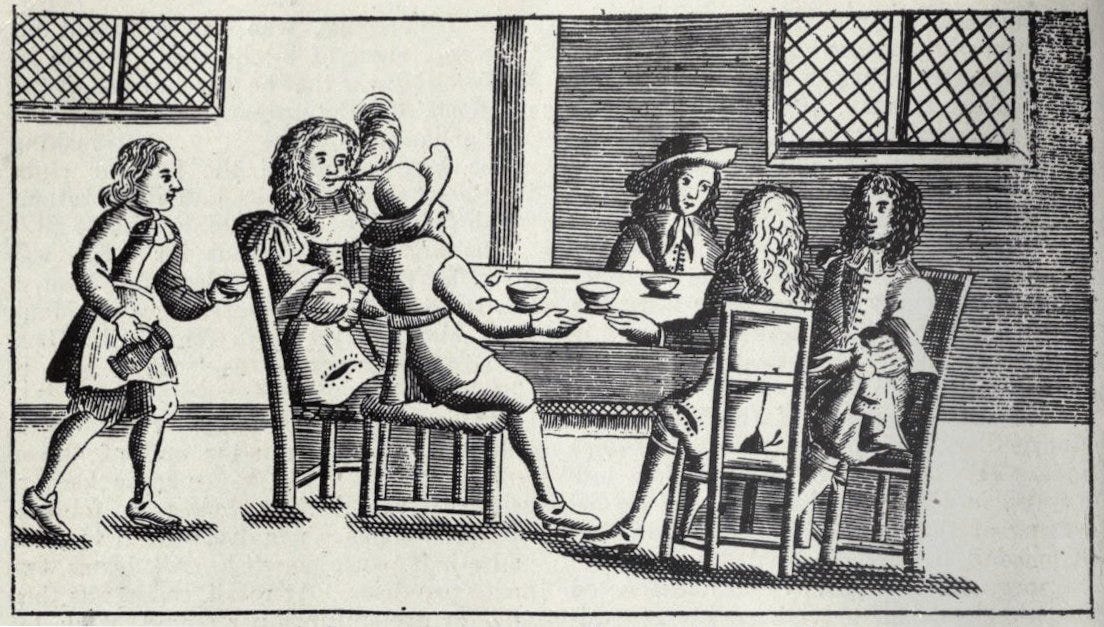
My inclination, in response to this 40-year process of democratic subsidence, has increasingly been to look for ways of reengaging communities—ordinary citizens—where they live; not necessarily with the political process itself but with each other, through community discussion, volunteering and the like. It is about the formal and informal reinvigoration of public spaces as a way of encouraging us to speak directly with each other as members of a community—and ultimately a nation—outside the infinitely corruptible spaces of various forms of media.
Without this social foundation, no amount of formal political process will save us. But this doesn’t mean we don’t need the formal political process as well; and that’s the thought I wanted to continue with.
I was reminded of all this while reading an essay that is attracting a fair bit attention, written by Belgium academic and author, Anton Jäger. Actually, it is his book that is attracting the attention, but the essay is a (relatively) quick way into his thinking.
He sets out nicely the processes that got us here:
Economically, the concerted capitalist offensive of the Thatcher–Reagan years left the working classes with stagnant wages, longer hours and growing debts. Socially and culturally, the aggressive marketization of everyday life and atomization of civil society, together with the evisceration of mass-membership parties, trade-union associations and public housing, produced a form of popular de-institutionalization. In class terms, these developments brought about both a complication and widening of existing social cleavages, yet these fractures rarely found lasting political reflection…Politically, 1989 saw the disappearance of whatever type of post-capitalist horizon was represented by state socialism—and the diminution of social democracy, as the former workers’ parties rebranded themselves as social liberals or ‘centre left’. The upshot for electoral politics in the 1990s was mass desertion from below, as Peter Mair was among the first to understand.1
He talks about the “depoliticisation” that was going on along with/because of all this, by which he means the way in which a technocratic approach to governance overtook how politicians approached their job and that we see in the likes of Anthony Albanese’s “incrementalism”. And then, most importantly, he notes that “the parties of government increasingly became para-state vessels or vehicles for the donor class, no longer pretending to fulfil their traditional role of popular representation.”2
The further point he makes that is relevant here is that “The institutions that came to the fore, dominating headlines in the 90s and early 2000s—the Federal Reserve, imf, World Bank, G7—were sealed off from popular pressures.” We can extend this to our own Reserve Bank, where such insulation is surely (and by design) affecting the nature of their analysis, a disconnect that Greg Jericho canvases in this recent piece.
This is all the essence of a depoliticised, technocratic governance that takes the demos out of democracy.
Jäger characterises it as “hyperpolitics”, a catchword we needn’t concern ourselves with too match. What we should note, however, is his contention that, “For all its furore, the hyperpolitical mode lacked the mass-political tools—above all, strong party forms—to effect concrete change.”
This is the interactive nature of what I have been trying to get at recently.
Community engagement of the sort I have talked about can’t ultimately be an ends in itself. Eventually, whatever consensus forms at that level needs to translate into political power “to effect concrete change”. Unlike Jäger, I don’t think this process presupposes “strong party forms” but it does require a coalition of the likeminded with the numbers in parliament. Absent this transfer of power from the people to the parliament we are all just talking to ourselves.
The tragedy of the Australian moment is that after the 2022 election, a broadly progressive coalition had come into existence despite itself and there was a opportunity for real change. Instead of recognising the opportunity—or rather, because all their incentives worked in the opposite direction—the major parties doubled down on their own survival. The Coalition imploded in a fit of culture-war- driven factionalism. Labor capitalised, consolidating their position within this hollowed-out structure, as their actual support remained a mile wide and an inch deep.
In other words, the logic of party politics usurped any commitment to genuine, inclusive reform and the parties continued on their merry way, as Jäger describes, becoming “para-state vessels or vehicles for the donor class, no longer pretending to fulfil their traditional role of popular representation.”
Such a majority as Labor currently commands does not equal genuine, lasting support, and popular discontent has only increased. It is easy for Labor to argue they must be doing something right, just as it was for the Coalition under John Howard to believe the same thing when they won four elections in row.
But look what was wrought in the ersatz sunshine of those heady days.
As ever, we are at an inflection point, and the 2028 federal election will shape the nation in ways I think will be decisive. Our medium-term prospects will turn on whether, at that moment, the many (justifiably) frustrated members of the electorate decide to overturn the table completely—as happened in the United States—and back the party of grievance, or whether they are still willing to put their faith and energy into pursuing the possibilities that presented themselves in 2022.
It’s good that Jäger cites Peter Mair in relation to all this, and Mair’s book, Ruling the Void, is still worth reading.
See this piece at Deepcut News for an account of how this might apply to our prime minister.
Great article. I welcomed Labor's housing reforms in the recent budget. However, I was dismayed when Albanese publicly stated that they were, in part, a response to temper the rise of One Nation. Why not actually pursue reform because of Labor's supposed ideological principles, including making social and economic conditions fairer for working people, rather than because of electoral calculations? How cynical is that?
The challenge for me is that you've diagnosed a problem of power, then prescribed participation. The community-building stuff is attractive, but I struggle with how it gets us from one to the other. Participation only becomes genuinely political when people can organise sufficiently to impose costs, shift resources or force decisions that actually CHANGE things.
That presumably requires some combination of unions, political parties, community organisations and whatever else we can invent. The problem is that I have bugger-all confidence about how we do that in a society that has spent fifty years becoming atomised, individualised and, frankly, pretty fucking narcissistic.
I’m not immune to this. I believe in solidarity while enjoying being left alone and avoiding meetings full of annoying people with bad opinions. Work's also taught me the annoying counterpoint: collective institutions are slow, procedural and frequently irritating because collective decision-making is slow, procedural and irritating.
In darker moments I suspect it will take a significant material crisis to make collective solutions unavoidable. But crisis doesn’t always break left, especially when the people with the money, access and institutional power are already much better positioned than the rest of us. It can produce solidarity, or fascism, scapegoating and hoarding. COVID was hardly encouraging, and climate change hasn’t done the trick yet.
Which brings me back, reluctantly, to your community stuff. Maybe that’s the necessary groundwork: building some capacity for collective life before things get properly ugly. Because waiting for the apocalypse and hoping everyone suddenly becomes a socialist seems a fairly shit organising strategy.