
Albo's tortoise
Why incrementalism will never get us where we need to be

Some may say when you go halfway
You only have halfway to go
—Lucius
With the Artemis II moon mission in the news, I was thinking about what happened with Apollo13. NASA’s third crewed mission, aiming for a Moon landing in April 1970, became a near‑fatal accident, rescued by improvised engineering and amazing teamwork. The astronaut’s salvation hinged on using the lunar module as a lifeboat, adapting materials the astronauts could access in the module to rebuild life-support systems, managing power to maintain those systems, and then executing manual course‑corrections to get the crew back into Earth’s atmosphere.
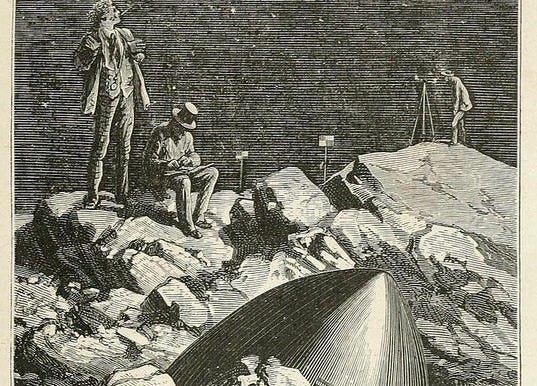
I was thinking, imagine if, instead of trying to save Apollo 13, a cadre of impeccably credentialled engineers had decided that the rescue attempt was too risky, too uncertain, too liable to “raise unrealistic expectations” among the public and the crew.
In this version, they would have focused on managing a dignified, comfortable death: optimising oxygen for a calm ending, scripting the astronauts’ final messages, drafting careful talking points for leaders to recite on the nightly news, and vetoing every improvised fix as “irresponsible” until the crew died exactly as forecast. At which point the same people could step forward and sadly declare, “You see? There was never anything else we could have done.”
Defining the political problem
Watching Anthony Albanese’s carefully crafted address to the nation the other night brought home again the extent to which so much of our current politics is like this: an argument between a class of political professionals who, largely in good faith, think they have found the secret sauce of governance, and a broader public who are completely frustrated with nearly everything such professional certainty is producing.
If the comparison with Apollo 13 sounds over the top, it’s only because it flatters our politics.
In truth, the stakes are infinitely higher: it is not three men in a crippled spacecraft but eight billion people on a destabilising planet, with one group of people at the console actively driving the destruction, and another group congratulating themselves for their measured approach to the insanity. The scandal is not just that this latter group is doing too little; it is that they have rebranded doing too little as the only responsible option, and then have the gall to act offended when anyone points out that, in any other control room on Earth, this would look less like realism and more like a death wish.
This professional political class are a highly educated, insider elite that now dominates centre‑left parties.
They share an understanding of the world that is technocratic, risk‑averse, obsessed with process. It treats politics as the art of operating inside constraints set elsewhere—by markets, ratings agencies, the Reserve Bank, existing alliances—rather than as the business of changing those constraints. It sees “seriousness” as the willingness to disappoint your own side in order to reassure everyone else. It treats its own limited sense of possibility as hard-headed realism.
Everyone else is emotional, naive or “maximalist”.1
But here’s the thing: the professional mindset I am highlighting—the “Brahmanism” I have spoken about before—doesn’t merely fail to prevent political decay, it actively produces it, and I’ll say that again. The professional mindset I am highlighting doesn’t merely fail to prevent political decay, it actively produces it.
The caution such players counsel is not a response to a pre-existing public resistance to reform; it is, in fact, the cause of that resistance. By refusing to engage the public in the work of reform—by actively hiding behind the sort of minutely calibrated voter management we saw the prime minister perform during his address to the nation—our political class creates the disengaged, distrustful electorate they claim prevents reform from being possible. And then, when the polls confirm what the professionals already believe, they point to the numbers and say: see, we told you so!
Think how much of our political life is organised to flatter this mindset: the way journalists ask “is that realistic?” instead of “is that right?”; the way any policy demand is immediately run through a mental spreadsheet of “how will that play in outer suburban marginals?”; the way the worst insult in insider politics is not “wrong” but “irresponsible”; the way such insiders define “social cohesion” or “bipartisanship” as agreeing with their worldview and dismissing everything else as disruptive, if not criminal.

The American sociologist, Robert Merton, saw a self-fulfilling prophecy, or circular argument in all this. He described a process in which an initially false belief or expectation leads people to act in ways that eventually make that belief come true.
Parties narrow their agendas to what polling says is safe. Leaders talk exclusively in the vaguest abstractions of “cost‑of‑living relief”, “productivity gains” and “security”, never in the concrete language of losers and winners. Anything that might arouse conflict is buried in process or outsourced to “independent” bodies or inquiries.2 Elections become choices between two different management teams offering the same low ceiling.
Ordinary voters are excluded from the process and are thus disengaged by design. The professionals then use that structurally manufactured disengagement to justify their own preference not to consult. After a few cycles of this, people are, in fact, effectively disengaged. They come to see politicians as “all the same” and become receptive to anyone who seems to speak plainly, even if it is a reactionary ratbag promising impossible things. A public that has not been invited into serious argument loses the habit of it. A public that has only ever seen politics as spin and back‑room deals concludes, sensibly, that politics is spin and back‑room deals.
Honestly, what were people meant to make of Albanese’s three-minute engagement the other night? It’s brevity alone spoke to the contempt that underwrites this elite relationship with we the people. It telegraphed perfectly his lack of faith in our ability to deal with the matter in any sort of detail or at any level of seriousness. It wasn’t designed to bring people into a conversation but to keep them at a distance.
Occasionally a politician will stick his or her head above the parapet, get beaten in an election the professionals have defined as unloseable, and the professionals then turn to the cameras and say: you see? This is why we can’t do more. People won’t wear it.
The prophecy has come true, and all it took was thirty years of excluding people from the process of governance in the first place!
A further sharpening of the problem
Hold all that in your head while we look at it from another angle, and I need to thank subscriber Ted Carter for putting me onto the work of Eyal Weizman, particularly the book, The Least of All Possible Evils: Humanitarian Violence from Arendt to Gaza.
Weizman’s subject is war and other military interventions and he describes what he calls the “humanitarian present”. He argues that in these environments, humanitarianism, human rights and international humanitarian law function to calculate, manage and moderate violence, making the “moderation of violence…part of the very logic of violence”, rather than a path to its abolition. He shows how the lawyers, NGOs and military planners who work together to minimise civilian casualties and stay within the rules of war, inadvertently help to normalise and perpetuate violence. Big questions—should this war be fought, should this wall be built?—are converted into small ones: how many casualties are proportionate? how high can the wall be? Each decision is an exercise in damage control within a fixed frame.
The political class does something eerily similar in domestic politics. Instead of asking, for example:
what kind of economy should we have after fossil fuels?
what kind of society do we want AI to help build or, do we even need it all?
how do we distribute the costs and benefits of transition from fossil fuels fairly?
they ask:
how do we keep the mines open just long enough to avoid a spike in unemployment?
how do we be “world‑leading” on AI regulation without scaring off investment?
how do we get to net‑zero without upsetting too many swing voters or donors?
Harm is managed, not ended. Risk is shifted onto those least able to carry it. And because the people making these calls occupy institutions that insulate them from consequences, they can experience themselves as prudent and compassionate even as they deepen the very crises they claim to be mitigating.
Weizman’s book is not an easy read—morally or intellectually—but it spells out something that almost no one in mainstream politics will admit: that a mindset devoted to “lesser evils” and harm‑minimisation—to incrementalism—can, over time, become the central machinery through which greater harms are normalised and made permanent.
Incrementalism, by definition, requires people to bear worse conditions indefinitely in the name of a long‑term political strategy that benefits the professional class rather than transforming, in any immediate material way, the lives of those who are suffering. Real reform is endlessly deferred to a more convenient future we never quite reach.

A small tangent to make the larger point
If nothing else, Anthony Albanese is a master at playing this game, though there are x-ray moments where, like Marlow in Heart of Darkness, glimpsing horror in fog, we, too, catch glimpses of what is really stalking us—enough to remind us that performance conceals as much truth as it reveals.
Look at this exchange from parliament the other day:
Mr ALBANESE: I was responding, of course, to an interjection from those opposite. Let me make three points. I made two before, so I’ll make three and see if they get it. One is that I am satisfied with the current number of seats in the House of Representatives. That’s 150, with 12 senators from each state. That’s point 1. Point 2 is that I’m also very satisfied with the composition of the current parliament.
A government member interjecting—
Mr ALBANESE: There are some over there as well; it’s true. And I like some of those over there too, to be fair!
Point 3 is that I have been very privileged to have the best campaign director I’ve ever seen in Paul Erickson. If I were to say to Paul Erickson, ‘We’ve got 94 seats, but how about we throw it all up in the air and see how it lands?’ I reckon Paul Erickson would have a pretty clear response.
Albanese’s little riff is a perfect crystallisation of the mindset in question.
Asked, in effect, whether he might contemplate structural reform of parliament, he offers three points, all of which amount to a single proposition: the system as it is has delivered for me and my party, therefore the system as it is is fine. He is “satisfied with the current number of seats”, “very satisfied with the composition of the current parliament”, and jokingly credits his campaign director as the genius who made it all possible. The real punchline is in the Erickson line: why on earth would you “throw it all up in the air and see how it lands” when you are sitting on 94 seats?
Politics is reduced to the management of an existing structure that is treated as given. The measure of that structure is not whether it produces legitimacy, responsiveness or justice, but whether it produces a comfortable majority for the incumbents. Any proposal to alter the rules of the game is cast, with a smile, as reckless self‑sabotage. Reform is cast as hindrance to party success.
The irony, of course, is that this prudence is suicidal over the longer term, which is surely the current lesson of world politics.
A parliament whose composition and practices are “satisfactory” to those inside it, but visibly fails to respond to the anxieties and aspirations of those outside it, is precisely the kind of parliament that breeds the nihilism that empowers One Nation and its kin. If the only people who feel represented by the system are the political class, others will look elsewhere—to wreckers, conspiracy‑mongers, anyone who at least admits that something fundamental is wrong.
One Nation turns inchoate resentment about social and economic change into a shared aesthetic of grievance, providing emotional satisfaction against a political class who have made collective material reform appear implausible or discredited.
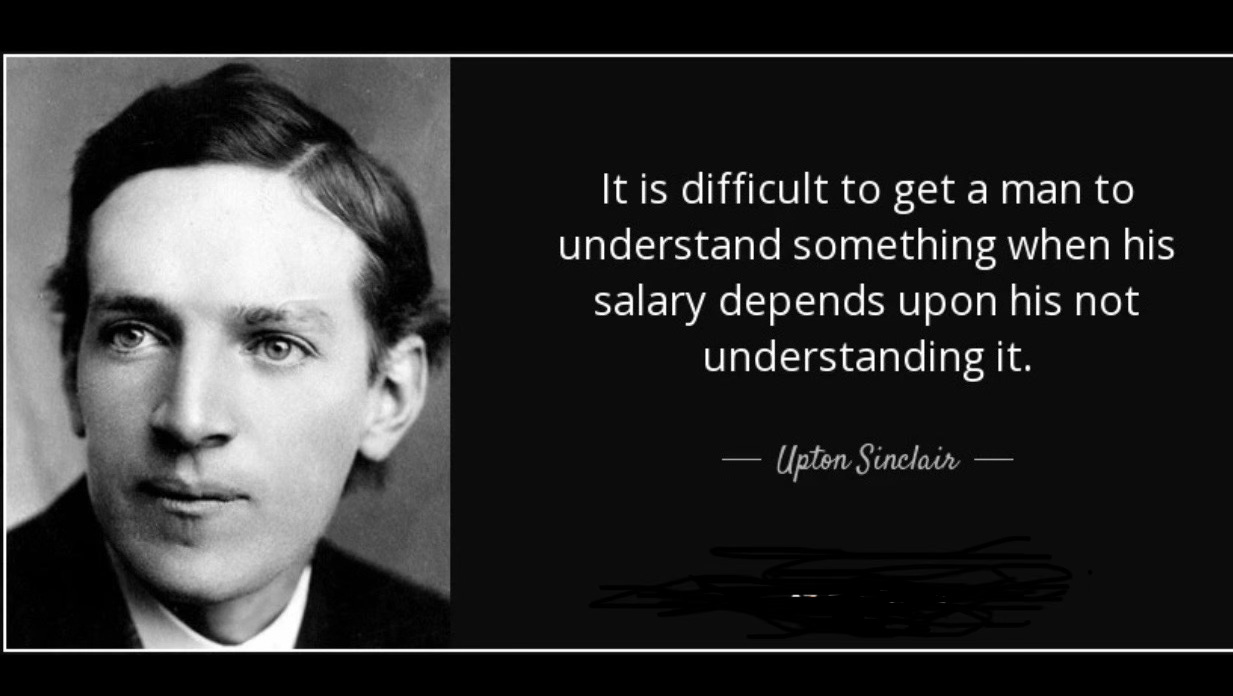
The PM’s quip clarifies things. No one whose power depends on the current arrangements is going to lead the project of changing them. That work will have to be done outside the Brahmin frame, in institutions and movements that do not measure success by the number of seats they currently hold, but by the extent to which they reopen the future as a shared project rather than one of managed decline.
Break on through to other side
The idea that we are trapped in this self‑fulfilling prophecy, this circular argument, can sound bleak, I know, but Merton was at pains to show that it is not a closed system. Just as Zeno’s tortoise only “never arrives” under a bad definition of motion, Albo’s paradox only holds under a bad definition of the political situation, one that can be overturned when our acceptance of its logic is collectively withdrawn.
That means several things at once, though a contemporary way to sum it might be: stop obeying in advance. Stop accepting the Brahmin claim that to fight for reform is futile.
It means parties and movements willing to argue from values rather than follow polls: to say clearly what they are for and who they are with, and to make the case for structural change, not just slightly nicer management of the same order. John Quiggin’s challenge to the Greens points in this direction.
It means taking democracy seriously enough to redesign its institutions: moving beyond ritualised “consultation” towards citizens’ assemblies, participatory budgeting, and local transition authorities with real power over money and planning and the ends we want to achieve.
It means building a communication infrastructure outside the mainstream echo‑chamber—spaces where, as Georgina Woods discusses, people in Yallourn North (or western Sydney or outer‑suburban Perth) can see their experiences reflected and their imaginations stretched, without everything being instantly filtered through the lens of the press gallery and decisions made elsewhere.3
And it means, bluntly, a cultural shift on the centre‑left: away from treating caution as the highest virtue, towards recovering a sense that politics is not the management of decline but the struggle over what kind of future we will have, and for whom.
Unions, the Greens, and community organisations will all be part of this.
The political class will call it naive. They have to; their authority depends on insisting there is no alternative to their way of doing things. But an alternative is already present, latent in the frustration of people who know that what we have is not working. The job is to give those frustrated people an option other than the likes of MAGA and One Nation.
Worth saying that this is not a criticism of expertise. The problem is not expertise as such—as the Apollo example I hope makes clear—but a political culture where the same narrow set of professionals allow their expertise on MEANS to override any legitimate input on ENDS from non-experts or non-professionals. From citizens!
By no means am I saying that all such independent bodies are bad—think the AEC or even the Reserve Bank (though the latter is testing my patience). The point is the need for them arises because of the political mindset I am describing. Part of redesigning the system involves changing these political incentives.
The building of such infrastructure is also at the heart of a lot Peter Lewis’s current work.
There’s something important in the claim that politics produces the disengagement it later treats as a constraint. For mine, it’s not that the public has withdrawn; it’s been pushed into channels the system can’t use. You see it in influencer economies, grievance politics and bursts of attention that flare and vanish just as quickly. The participation is still there, just fractured and hard to organise, and shaped in part by how politics now operates.
The managerial tendency Godfrey points to sits inside that. Not only as a mindset, but as a sorting process. If your job is to hold together a coalition under fiscal limits, media pressure and a permanent campaign, you end up choosing steady decline over failed transformation. Do that long enough, and you stop producing leaders who might take the risk. You get operators. Caretakers. People with moderate skill in explaining why nothing larger can be attempted.
Take housing. Everyone agrees it’s stuffed. Prices, rents, supply, the whole mess. Yet the response is a set of calibrated nudges that protect the asset base while offering just enough relief to say something is being done. No one wants to touch the settings that would actually shift distribution because that would mean naming winners and losers. So, the crisis is managed, not solved, and the people carrying it are told this is what responsibility looks like.
That’s where what passes for the centre-left deserves a harder whack. It talks about constraints imposed from outside, then quietly reproduces them through its own choices and habits. Language narrows what’s sayable. Conflict is displaced into process and kept out of view. Clear distributional stakes are avoided. The thinness that follows is then blamed on voters, or the media, or anyone except the people making the calls.
The Apollo 13 comparison is neat, but it assumes agreement on the destination. Politics doesn’t offer that. Some people are in the capsule. Others are asked to carry the cost of keeping it stable.
So, the question is what would make a politics that actually changes direction more viable than one that manages it, and who is expected to absorb the cost while that shift is forced into view.
Fantastic piece, Tim.
Given the subject matter and your thesis, I’m a little surprised that you didn’t reference Max Weber, who made not dissimilar arguments which were widely accepted as predicting Fascism. That irony isn’t lost on me given what we see emerging across the globe and now with the active support of the government of our major ally “with whom we have many shared values” according to our political establishment.